
They’re Curious. Clever. Loyal.
And They’re Being Killed for Sport.
Wisconsin’s wildlife belongs to all of us — not to those who profit from killing contests. Here’s what you need to know, and what you can do.
Foxes are among the most exploratory and adaptable mammals in the world, capable of learning complex problem-solving tasks.
Crows demonstrate cognitive abilities on par with a 7-year-old child — using tools, solving multi-step puzzles, and recognizing human faces.
Coyotes form lifelong pair bonds and co-parent their young — displaying family loyalty rarely seen outside of mammals with complex social structures.
Badgers engineer elaborate underground burrow systems that dozens of other species depend on for shelter and survival.
What Is a Wildlife Killing Contest?
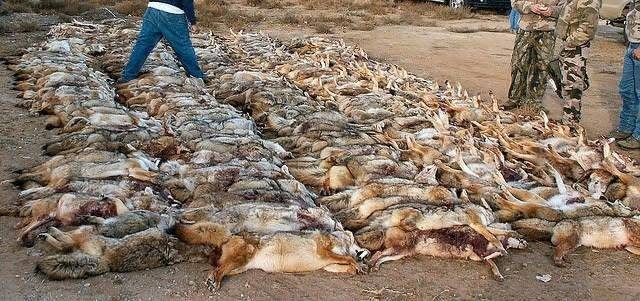
A wildlife killing contest is an organized competitive event in which participants compete to kill the most, the largest, or sometimes the smallest animals — within a set time period — for cash, prizes, or trophies.
These are not hunting. There is no management purpose, no harvest intent, no wildlife management justification — only competition to see who can pile up the most bodies.
— Great Lakes Wildlife Alliance position, consistent with findings of state wildlife agencies that have reviewed and banned these eventsContests are typically held over a single weekend. Entry fees and sponsorships fund cash jackpots. Dead animals are often weighed in publicly — sometimes in parking lots — with carcasses discarded afterward. The killing is an end in itself.
The Scale of the Problem
GLWA has documented over 400 individual Wisconsin wildlife killing contests. These events are not rare, isolated incidents — they are a systemic, organized industry operating largely without oversight.
The Scale of the Problem
GLWA has documented over 400 individual Wisconsin wildlife killing contests. These events are not rare, isolated incidents — they are a systemic, organized industry operating largely without oversight.
The Animals Targeted in Wisconsin Contests
Virtually any non-game or “non-protected” species is fair game. These are ecologically vital animals — predators, scavengers, and seed-dispersers that healthy Wisconsin ecosystems depend upon.
What They’re Competing For
Wildlife killing contests are commercial events. Entry fees fund cash jackpots, and sponsors — often firearms dealers, hunting supply stores, and outfitters — provide additional prizes. The animals are the product. The killing is the entertainment.
- Cash jackpots ranging from hundreds to thousands of dollars, paid to whoever kills the most animals by weight
- Firearms, ammunition, and hunting equipment as prizes from corporate sponsors
- “Heaviest single animal” and “most animals” categories, sometimes run simultaneously
- “Smallest coyote” categories targeting pups — including nursing mothers killed alongside dependent young
- Gift cards, merchandise, and trophies for top finishers
- Entry fee pools distributed as tiered prize money, structured like gambling payouts
- Alcohol, food, and spectator events built around carcass weigh-ins
- Online leaderboards and social media contests extending killing competition beyond event boundaries
This Isn’t Hunting — and It Doesn’t Work
Proponents often defend killing contests as “just hunting” or as a tool for livestock protection. Both claims are contradicted by science, wildlife management professionals, and the structure of the events themselves.
It’s Not Wildlife Management
Legitimate wildlife management is guided by population data, ecological goals, and regulated harvest. Killing contests have no management objective — no population targets, no harvest data submitted, no DNR oversight. Animals killed are simply discarded.
It Doesn’t Protect Livestock
Mass removal of coyotes triggers a well-documented population rebound effect: surviving coyotes increase litter sizes and neighboring packs move in to fill the void. Non-lethal coexistence methods — livestock guardian animals, fencing, deterrents — are the only proven approaches to reducing depredation.
It Actually Increases Conflicts
When pack structures are disrupted by mass killing, the social regulation that experienced adults impose on juvenile behavior is lost. More inexperienced coyotes, displaced from their territories, leads to more human-wildlife conflict — not less.
Hunters Oppose It Too
Many hunters — including those who pursue coyotes, foxes, and rabbits — oppose killing contests because they undermine the ethical foundations of hunting: fair chase, respect for the animal, and harvest with purpose. These events attract criticism from within hunting culture itself.
It Violates Fair Chase Standards
The Boone and Crockett Club’s “fair chase” principle — foundational to American hunting ethics — requires that the animal have a reasonable chance to escape. Mass competitive events optimized for maximum kills are incompatible with this standard.
It Harms Non-Target Species
Electronic calls, baiting, and indiscriminate trapping used in contests regularly injure or kill non-target species — including birds of prey, domestic animals, and in some cases, federally protected species.
Scientists, Researchers, and Wildlife Agencies Agree
A growing coalition of wildlife scientists, conservation biologists, and state wildlife agencies has gone on record opposing wildlife killing contests. The scientific consensus is clear.
States That Have Banned Killing Contests
A growing number of states have acted to ban wildlife killing contests outright — not merely regulate or reduce them. Wisconsin has not.
✓ States With Full Bans
These states have passed regulations or legislation prohibiting wildlife killing contests for all or most species:
- California
- Vermont
- New Mexico
- Arizona
- Massachusetts
- Colorado
- Oregon
✗ Wisconsin: No Ban
Wisconsin has no prohibition on wildlife killing contests. Events are unregulated, unreported, and subject to no DNR oversight. Over 400 have been documented by GLWA alone.
GLWA has formally petitioned the Wisconsin Natural Resources Board to ban these events. The fight continues.
Actual Contest Advertisements
These are real posters and flyers from Wisconsin wildlife killing contests, documented by GLWA. They speak for themselves.
See the Full Picture
These videos help explain what wildlife killing contests are, who is fighting to end them, and why this matters for Wisconsin’s wildlife and wild places.
Add video embed URL
Video Title Here
Brief description of this video.
Add video embed URL
Video Title Here
Brief description of this video.
Add video embed URL
Video Title Here
Brief description of this video.
The Public Trust Doctrine and Wisconsin’s Wildlife
Wisconsin’s wild animals are owned by no one — and by everyone. The Public Trust Doctrine, enshrined in Wisconsin law and reinforced by generations of court decisions, holds that the state manages wildlife on behalf of all citizens. Wildlife killing contests exploit that shared inheritance for private gain.
Who Owns Wisconsin’s Wildlife?
Under the Public Trust Doctrine, Wisconsin’s wild animals are held in trust by the state for the benefit of all present and future citizens — not private interests, not commercial enterprises, and not killing contest organizers.
Taxation Without Representation
The vast majority of Wisconsin residents — non-hunters, hikers, wildlife watchers, photographers, and families — fund the DNR through taxes and federal programs. Yet they have no voice when that wildlife is given over to killing contests that benefit the few.
The North American Model
The North American Model of Wildlife Conservation requires that wildlife be managed scientifically, democratically, and for the public benefit. Killing contests violate at least three of its seven pillars, including the ban on frivolous killing.
No Regulatory Framework
Unlike licensed hunting seasons — which require tags, reporting, population assessments, and regulatory oversight — killing contests operate completely outside the management system. There is no accountability, no data, and no conservation return.
“A three-minute testimony to the Natural Resources Board can make all the difference in the life of an animal.”
Take Action Today
You don’t need to be an expert, a lobbyist, or a scientist. You need to show up — and there are many ways to do that. Pick one. Do it today.
Testify Before the Natural Resources Board
3 minutes · Remote · FreeThe Wisconsin Natural Resources Board meets monthly and takes public comment on wildlife policy. You can testify remotely — from your home, in three minutes — and your words become part of the official record. The Board has the authority to ban killing contests without an act of the legislature.
Next NRB meeting: Check dnr.wisconsin.gov/about/nrb for dates and remote access instructions.
Get Talking PointsWrite a Letter to the Editor
15 minutes · High impactLetters to the editor in local and regional newspapers remain one of the most effective forms of citizen advocacy. Legislators read them. Decision-makers read them. And other community members who feel the same way — but haven’t spoken up — see them and feel less alone.
We’ll give you the facts, the framing, and a template. You personalize it. Your voice matters more than ours.
Get the TemplateJoin Wildlife Wednesdays
Weekly · Free · OnlineWildlife Wednesdays is GLWA’s weekly Google Meet — open to everyone. We share updates, coordinate actions, hear from advocates, and build the grassroots infrastructure that makes our work possible. No experience necessary. Just show up.
Every Wednesday. Wisconsin time. Free to join.
Join This WeekAttend an NRB Meeting in Person
Monthly · PowerfulWhen citizens fill the room, it changes the dynamic. Coordinated in-person testimony — especially from a diverse group of Wisconsin residents — sends a message that transcends the official record. GLWA coordinates testimony teams for high-priority hearings.
Sign Up to AttendSupport GLWA’s Work
Any amount · Direct impactGLWA is 100% grassroots-funded. We accept no corporate money, no conditional grants — which means we can say exactly what needs to be said and do what needs to be done. Litigation, investigations, testimony coordination, and public education all run on your support.
Donate to the AllianceLearn More & Share
Always openRead our full research, review the contest database, explore the legal arguments, and share what you learn with your network. An informed public is the most powerful constituency wildlife has.
Explore speakforwildlife.orgWhy the Natural Resources Board Matters
The Wisconsin NRB sets wildlife policy without requiring a bill to pass the legislature. They have the authority to ban killing contests right now — if they hear from enough Wisconsin residents. Your testimony is not performative. It is the mechanism.
- Remote testimony accepted — you never have to leave home
- Three minutes is all that’s required
- Your comments become part of the official administrative record
- Coalition testimony from multiple residents is especially powerful
- GLWA can connect you with talking points, preparation, and coordination